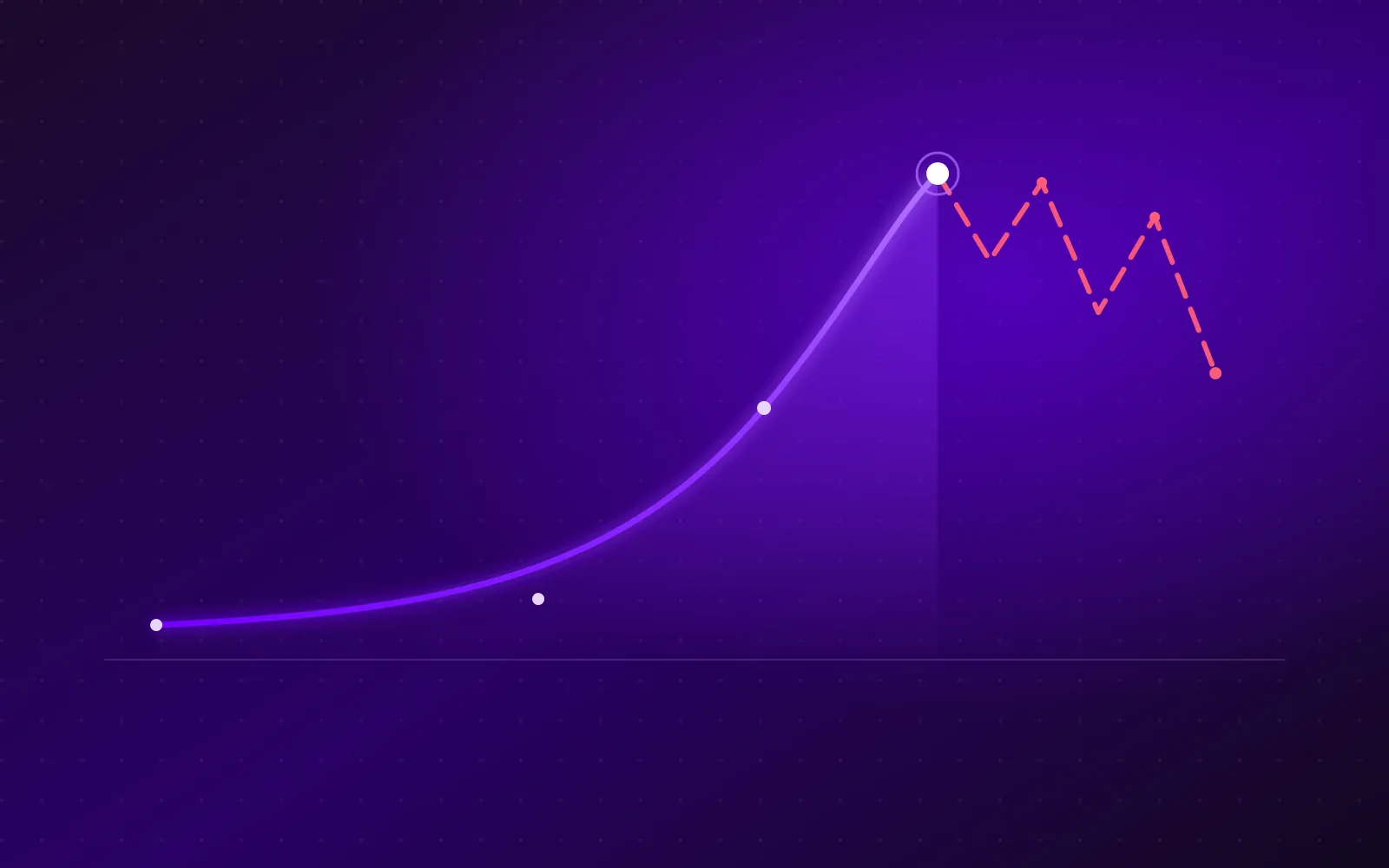
I've been thinking a lot about the gap between how productive AI makes me feel and how productive I actually am. They're not the same thing, and I don't think we talk about that enough.
A report crossed my desk recently that put real numbers to it. Faros AI dug into telemetry from tens of thousands of developers and found a pattern they nicknamed "acceleration whiplash." Teams are shipping dramatically more, and breaking things at a rate that more than keeps pace. That framing stuck with me, but honestly I didn't need the data to recognise it. I've been living it.
The feeling is real
Let me be fair to the tech first, because the speed is not a lie.
I can scaffold a feature in the time it used to take me to make coffee. Boilerplate that I'd have grumbled through for an hour is done before I've finished reading the ticket. When I'm genuinely stuck, I've got a rubber duck that talks back and occasionally knows more than I do. On a good day it feels like I've got a junior dev, a docs search, and a pair-programming partner all in one tab.
That's not hype. That's just Tuesday now.
The bill comes later
Here's the part that took me a while to admit. All that speed shows up at the start of the work. The finishing didn't get faster. If anything it got slower.
Because AI code has this sneaky quality: it looks right. The naming's sensible, the structure's tidy, it reads like something a competent person wrote. And then you actually reason through it and the logic is subtly, confidently wrong. That's so much harder to catch than obviously bad code. Bad code announces itself. This stuff smiles at you.
So I accept a suggestion, it looks fine, it merges, and the cost doesn't disappear. It just moves. It moves to the reviewer squinting at a diff twice the size it needed to be. It moves to production, where the bug that "looked right" finally shows its hand. It moves to the poor soul who picks up the half-finished thing I started three weeks ago and never circled back to, because starting was so cheap I started five other things too.
We didn't remove the work. We shuffled it downstream and stopped looking at it.
Who actually pays
The people quietly holding this together are the senior engineers. They're the ones who can still tell the difference between code that works and code that just looks like it does, and that skill is suddenly worth a fortune. They're spending more of their week in review than ever, acting as the last line of defence against a firehose of plausible-looking output.
Which is why it makes me wince when I hear companies talk about trimming engineering headcount because "AI made everyone more productive." The work to make AI output actually safe and maintainable didn't shrink. It grew. And it landed squarely on the exact people some places are tempted to let go. That's not a productivity dividend. It's a debt with a delayed invoice.
What I'm actually doing about it
I'm not throwing the tools out. I'd be daft to. The upside is real and it's not going back in the box. But I've changed how I work with them:
I treat every suggestion as a draft, not a delivery. Accepting AI code is fine. Merging it without reading it is not, and I've had to be honest with myself about which one I was really doing.
I keep my PRs small. I banged on about this in my code review post and I believe it more than ever. Small changes are the only way review survives when the code's coming this fast.
I finish things before I start new ones. Boring advice. Hardest habit to keep now that starting is free.
I watch what breaks, not just what ships. Throughput feels great on a dashboard and tells you almost nothing about whether the thing actually works.
The now, honestly
I ended my last AI post by saying it isn't the future anymore, it's the now. I still believe that. But a year of living in the "now" has taught me the rest of the sentence.
Fast was the easy win. Fast is basically solved. The hard part, the part that was always the actual job, is shipping something that's fast and correct and still maintainable when someone else opens it in six months. AI hands you the first one for free and quietly bills you for the other two.
Worth having. Just worth reading the invoice.